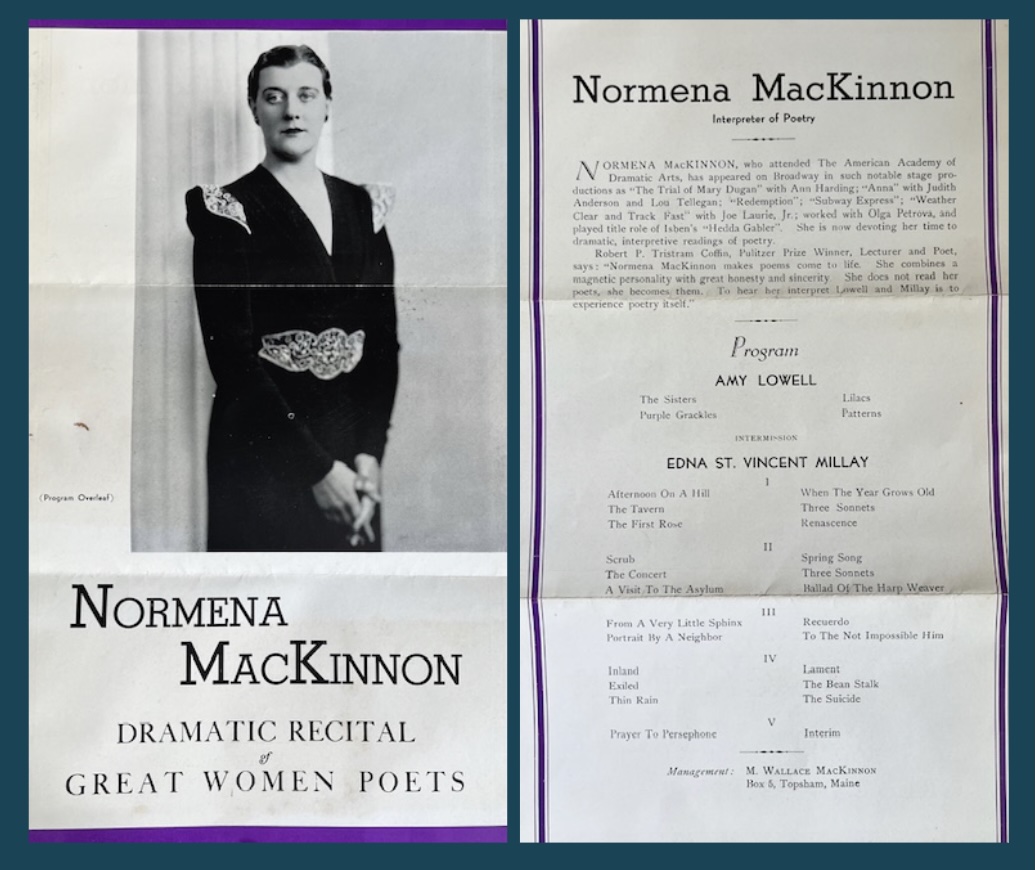
Once I hit my 50s I started thinking a lot about throughlines — interests and intellectual commitments that have circled back around after years, and even decades. My 16-year-old self would be stunned to learn that my 59-year-old self is grateful to Connie Krueger, an English teacher in my Wisconsin high school. I remember nothing of that year with her except what felt like its low point, when we were made to memorize Wordsworth’s “I wandered lonely as a cloud.” We couldn’t even choose our own poem to memorize; I wondered if I was the only one who felt like I was wandering lonely in the fall of 1982.
It would take 40 years for the meaning of that exercise to reveal itself to me. A few years ago, when my father-in-law, toward the end of his life, was losing his memory, one of the very last things he retained was this poem (that and Frost’s “whose woods these are I think I know”). In those final years, Bill took such palpable delight in reciting these Wordsworth lines for me, or us reciting it together. Steve and he often read it together on their daily visits. One of the very last times I saw Bill, during the pandemic, in the parking lot of his Assisted Living community, he recited it with such joy and gusto.
I didn’t know it in 1982, but Mrs. Krueger had made possible some of the most wonderful and special moments of my adult life. And, it turns out, she didn’t put me off poetry entirely. In high school or college I also came by a paperback copy of Edna St. Vincent Millay’s Collected Lyrics — poetry that especially resonates with those angsty years. “Safe upon the solid rock the ugly houses stand: Come and see my shining palace built upon the sand!” The book is still in my living room, literally read to pieces.
Poetry continued to grab my attention. While writing about the 18th-century Massachusetts gownmaker Rebecca Dickinson, I was drawn to the Isaac Watts hymns quoted throughout her diary — “in all my fears, in all my straits, my soul for thy salvation waits.” And Entangled Lives — my history of the working women of Hadley, Massachusetts — owes a substantial debt in both its conception and demeanor to Edgar Lee Masters’ mesmerizing Spoon River Anthology, and that book’s effort to memorialize in verse not just the people who lived in that imagined community, but the ways that their lives intersected, and together wove the fabric of a place.
In moving to Amherst, naturally I was keen to walk streets known to Emily Dickinson, but there I also encountered the writings of the great Richard Wilbur. Wilbur taught me to appreciate the New England landscape in new ways, from its Cicadas and Barred Owls even to its potatoes, with their “second rate flowers, awkward and milky and beautiful only to hunger.”So, when I learned — many years ago now — that my husband’s family had poets and poetry swirling around them, too, naturally my ears perked up. Copies of Normena MacKinnon’s publicity photos — this would be my husband Steve’s great aunt — were scattered all around the family’s home in Topsham Maine, and so for years I’ve been curious about her deeper story. Also over long family conversations I learned about Normena’s “friend” — maybe more, but no one seemed entirely sure — the artist Gertrude Tiemer.
For many years, for me these were just stories shared over summer evenings, until a few years ago when the family home was emptied — and hundreds of letters together with diaries, scrapbooks, photo albums, and other memorabilia, all made its way to me — the archivist and historian who married in.
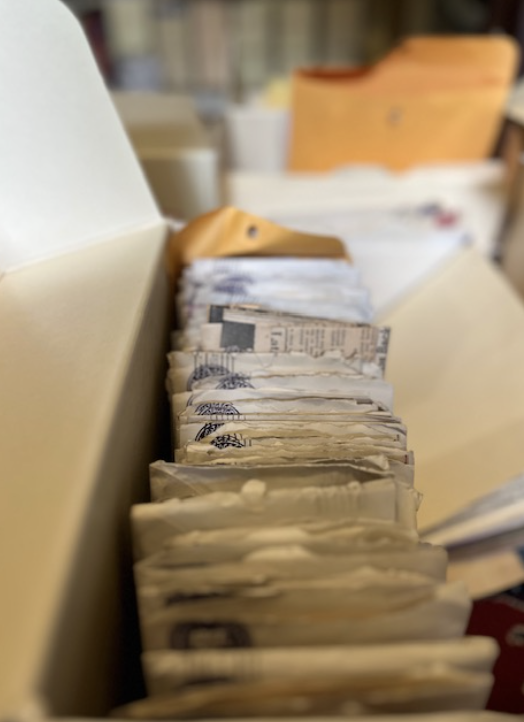
Among those materials are hundreds and hundreds of letters between Normena and Gertrude — written nearly every day they were apart, and usually more than once a day, as this was an era when the post was sent and delivered morning, noon, and night.
This portrait of Normena also came to us, and though I had seen it hundreds of times, I had never noticed that the artist was none other than Gertrude Tiemer. From the volume of correspondence it is safe to say that Normena was literally never out of Gertrude’s thoughts, and vice versa. As I’ve started reading this correspondence I’m finding myself mesmerized by each woman’s journey, and their journey together as a pair. And so I’ve decided to embark on a new book project that thinks about the lives of these two aspiring artists in the 2nd quarter of the 20th century, and the union that Gertrude called their “comradeship of beauty,” or, as Normena would say, “the artist in you speaking to the artist in me.”


Leave a comment